When pricing products or services for a growing business, mixing up gross margin and markup is one of the most common and costly financial errors a business owner can make. While both terms describe the relationship between what an item costs to produce or acquire and what it sells for, they look at that relationship from entirely different perspectives. Using a break-even calculator alongside a pricing model ensures your revenue covers all overhead, but mastering the math behind gross margin versus markup protects your fundamental unit profitability.
Markup tells you how much to add to your cost to arrive at your selling price, using your product cost as the baseline. Gross margin tells you what percentage of your final selling price is actual gross profit, using total revenue as the baseline. Confusing the two means you might price an item at a 50% markup while mistakenly assuming you are making a 50% profit margin, leaving your business severely underfunded once expenses roll in.

Understanding the Core Definitions and Variables
Before diving into calculations, it is essential to define the standard variables used in business math and pricing strategies:
- Cost (C): The direct expenses incurred to produce, manufacture, or acquire a single unit of inventory (Cost of Goods Sold or COGS).
- Revenue / Selling Price (S): The final price at which the customer purchases the product or service.
- Gross Profit (GP): The monetary difference between the selling price and the cost ($GP = S - C$).
When running numbers for your business, keeping these three variables distinct prevents calculation errors. Markup expresses profit as a fraction of the cost, while gross margin expresses profit as a fraction of the selling price.
The Markup Formula Explained
Markup is calculated by taking the dollar amount of profit and dividing it by the cost of the product, then multiplying by 100 to convert it into a percentage.
Markup Formula:
Markup % = [(Selling Price - Cost) / Cost] * 100
Alternatively, if you know your desired markup percentage and your cost, you can determine your required selling price:
Selling Price from Markup Formula:
Selling Price = Cost * [1 + (Markup % / 100)]
For example, if a handmade ceramic mug costs you $10 to produce in raw materials and labor, and you apply a 100% markup, your calculation is $10 * [1 + (100 / 100)] = $20 selling price. Your gross profit is $10.
The Gross Margin Formula Explained
Gross margin, often simply called profit margin, measures how much of every sales dollar remains after paying the direct costs of producing the goods. It is calculated by dividing the gross profit by the selling price.
Gross Margin Formula:
Gross Margin % = [(Selling Price - Cost) / Selling Price] * 100
Or expressed using gross profit and revenue:
Gross Margin % = (Gross Profit / Selling Price) * 100
If you sell that same ceramic mug for $20 with a cost of $10, your gross profit is $10. Your gross margin is ($10 / $20) * 100 = 50%. While your markup was 100%, your gross margin is 50%. This fundamental divergence trips up many retail and e-commerce founders.
Side-by-Side Comparison Table
To visualize how markup and gross margin scale differently against identical costs and selling prices, review the comparison table below:
| Cost (C) | Selling Price (S) | Gross Profit (GP) | Markup Percentage | Gross Margin Percentage |
|---|---|---|---|---|
| $10.00 | $15.00 | $5.00 | 50.00% | 33.33% |
| $10.00 | $20.00 | $10.00 | 100.00% | 50.00% |
| $10.00 | $30.00 | $20.00 | 200.00% | 66.67% |
| $50.00 | $75.00 | $25.00 | 50.00% | 33.33% |
| $50.00 | $100.00 | $50.00 | 100.00% | 50.00% |
Notice that as your selling price increases relative to your cost, markup climbs much faster than gross margin. Gross margin is bounded by a maximum of 100% (which would require a zero-cost product sold for a positive price), whereas markup can theoretically scale infinitely.
Worked Example 1: Setting Retail Prices for Apparel
Imagine you run an independent apparel boutique and you are stocking a new line of linen shirts. The manufacturer's cost (COGS) to acquire each shirt is $24.00. Your business model requires you to maintain a healthy gross margin of 60% to cover high retail store rent, staff wages, and marketing expenses.
Many business owners mistakenly take 60% of the $24 cost and add it, pricing the shirt at $38.40. Let's test what happens if you do that:
- Cost = $24.00
- Mistaken Selling Price = $38.40
- Gross Profit = $38.40 - $24.00 = $14.40
- Actual Gross Margin = ($14.40 / $38.40) * 100 = 37.5%
By confusing markup with margin, you fell far short of your 60% target. To correctly price the shirt for a 60% gross margin, you must use the margin-to-selling-price formula. Rearranging the gross margin equation to find the selling price:
Selling Price from Desired Margin:
Selling Price = Cost / [1 - (Desired Gross Margin % / 100)]
Plugging in our numbers:
Selling Price = $24.00 / [1 - (60 / 100)]
Selling Price = $24.00 / [1 - 0.60]
Selling Price = $24.00 / 0.40
Selling Price = $60.00
Let's verify this correct calculation:
- Cost = $24.00
- Selling Price = $60.00
- Gross Profit = $60.00 - $24.00 = $36.00
- Gross Margin % = ($36.00 / $60.00) * 100 = 60.0%
By utilizing the correct formula, your selling price is $60.00, yielding a $36.00 gross profit per shirt and hitting your exact 60% margin target. In this scenario, your markup was ($36.00 / $24.00) * 100 = 150%.

Worked Example 2: Wholesale and B2B Pricing Strategy
Now consider a different business context: B2B wholesale distribution. You supply specialty artisanal coffee beans to local cafes. Your roasting, packaging, and raw bean cost per 12-ounce bag is $8.00. A prospective cafe client asks for your wholesale price sheet, and you know industry standard wholesale markup for specialty goods sits comfortably around 75%.
To calculate your wholesale selling price using a 75% markup:
Selling Price = Cost * [1 + (Markup % / 100)]
Selling Price = $8.00 * [1 + (75 / 100)]
Selling Price = $8.00 * 1.75
Selling Price = $14.00
Now let's analyze what this wholesale price means for your gross margin:
- Cost = $8.00
- Selling Price = $14.00
- Gross Profit = $14.00 - $8.00 = $6.00
- Gross Margin % = ($6.00 / $14.40 ... wait, $14.00) = ($6.00 / $14.00) * 100 = 42.86%
Your wholesale markup is 75%, which translates to a 42.86% gross margin. When the cafe subsequently sells that bag to the end consumer for $22.00, their retail markup and margin calculations will be entirely separate, based on your $14.00 wholesale price as their cost.
Converting Between Markup and Margin Percentages
Business owners frequently need to convert between these two metrics when negotiating with vendors or analyzing financial software reports. Here are the direct conversion formulas:
Converting Markup to Gross Margin
If you know your markup percentage and want to find the equivalent gross margin percentage:
Gross Margin % = [Markup % / (100 + Markup %)] * 100
Example: If your markup is 100%, the margin is [100 / (100 + 100)] * 100 = [100 / 200] * 100 = 50%.
Converting Gross Margin to Markup
If you know your target gross margin percentage and want to find the required markup percentage:
Markup % = [Gross Margin % / (100 - Gross Margin %)] * 100
Example: If your target margin is 50%, the markup is [50 / (100 - 50)] * 100 = [50 / 50] * 100 = 100%.
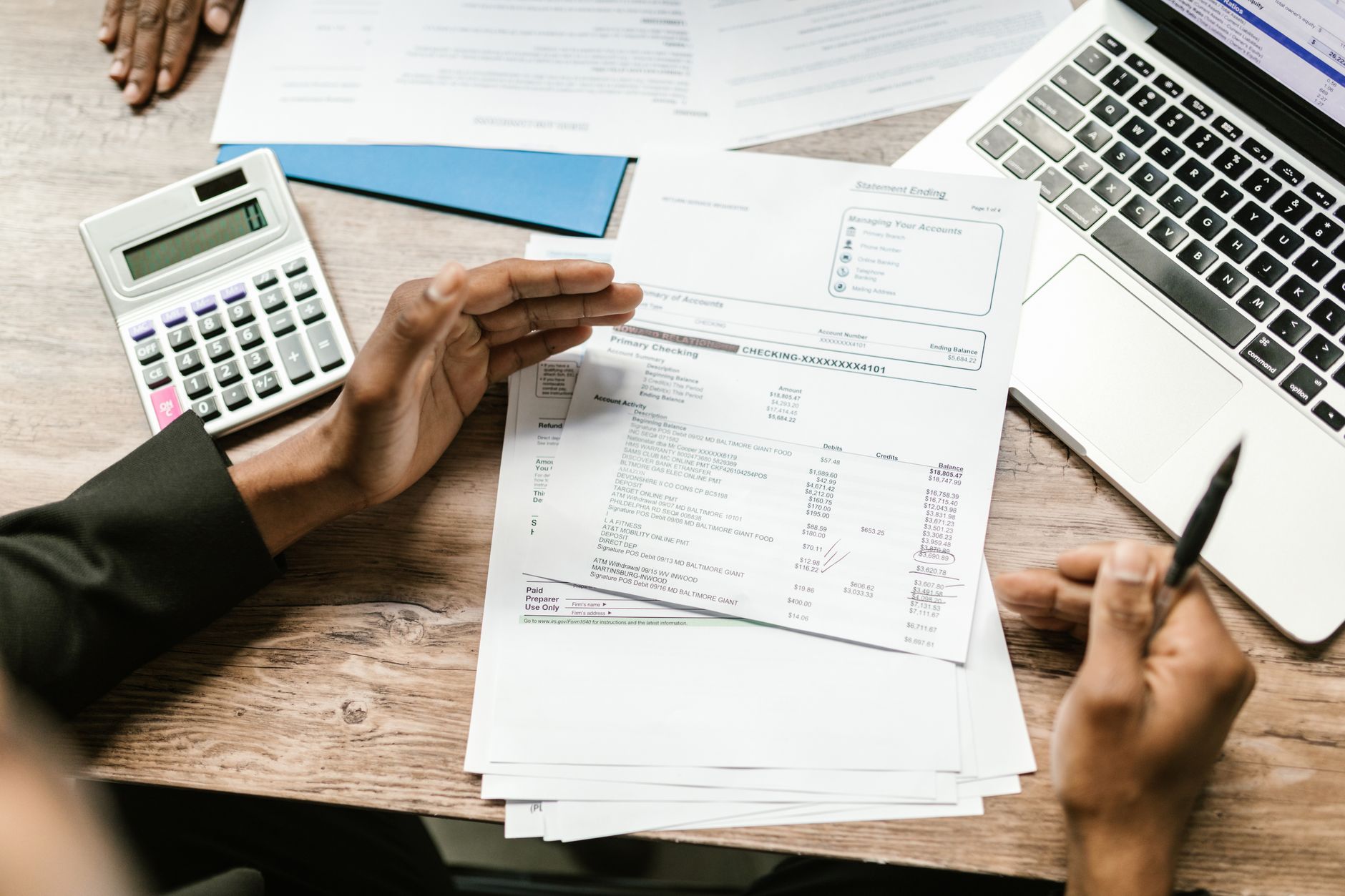
Operational Costs, Overhead, and Break-Even Considerations
Calculating gross margin and markup tells you how much money remains after paying for the direct cost of goods sold, but it does not account for fixed operating expenses (OPEX) such as rent, software subscriptions, insurance, administrative salaries, and utilities. These overhead costs must be covered by your total gross profit pool.
When analyzing how your gross profit supports your overhead, pairing your pricing math with tools like a break-even calculator is essential. If your monthly fixed costs total $10,000 and your average product gross profit is $20 per unit, you need to sell 500 units per month just to cover overhead before generating net profit. Understanding whether your markup or margin generates sufficient gross profit per unit prevents you from working at high volume with zero net return.
Common Pricing Mistakes to Avoid
Even experienced entrepreneurs fall into predictable traps when evaluating product pricing and profit metrics. Watch out for these pitfalls:
- Treating Markup as Margin: Assuming a 30% markup equals a 30% margin. As demonstrated earlier, a 30% markup on a $10 cost gives a $13 price, resulting in a margin of only 23.08%.
- Ignoring Hidden COGS: Failing to include shipping supplies, inbound freight, merchant processing fees, or direct packaging in your cost (C) variable. Underestimating product cost artificially inflates perceived margins.
- Forgetting Volume Discounts: Offering bulk discounts to wholesale clients without recalculating whether your gross margin still covers allocated operational expenses.
- Competing Solely on Price: Lowering markup blindly to match competitors without verifying that your lower selling price leaves enough gross margin to sustain business operations.
Step-by-Step Pricing Workflow for New Products
Follow this repeatable checklist whenever you introduce a new product or service offering to your catalog:
- Calculate Accurate Unit Cost: Sum all direct material, direct labor, inbound shipping, and packaging costs associated with a single unit.
- Determine Financial Targets: Establish your required net profit goals and estimate your monthly fixed overhead expenses.
- Select Your Pricing Metric: Decide whether your industry standard relies on markup (common in wholesale and retail) or gross margin (common in corporate finance and SaaS).
- Calculate the Selling Price: Use the appropriate formula (Cost * [1 + Markup%] or Cost / [1 - Margin%]) to arrive at your baseline price.
Validate Unit Economics: Test your selling price against market research, competitor pricing, and break-even calculator models to ensure viability.
Frequently Asked Questions
What is the main difference between gross margin and markup?
Markup is calculated based on the cost of the product (profit divided by cost), while gross margin is calculated based on the selling price or total revenue (profit divided by selling price). Because the denominators differ, markup percentage is always higher than gross margin percentage for the exact same dollar profit.
If my markup is 50%, what is my gross margin?
Using the conversion formula [Markup / (100 + Markup)] * 100, a 50% markup equals [50 / 150] * 100, which is 33.33% gross margin.
Why do retailers prefer markup while accountants prefer gross margin?
Retail buyers and floor staff find markup intuitive because they take wholesale cost and multiply it instantly by a standard multiplier to set price tags. Accountants and financial analysts prefer gross margin because it shows what proportion of total revenue is available to pay operating expenses and generate net income.
Does gross margin include operating expenses like rent and payroll?
No. Gross margin only subtracts the direct cost of goods sold (COGS) from revenue. Operating expenses like rent, utilities, marketing, and administrative payroll are subtracted from gross profit to determine operating income or net profit.
How do I price a service business where cost of goods sold is near zero?
For service businesses, your direct cost is typically the hourly labor rate paid to staff or your own time valued at an hourly rate. You apply markup or target margin to that labor cost to cover administrative overhead and profit.
Can gross margin ever be higher than 100%?
No. Gross margin is expressed as a percentage of total revenue. Even if a product has zero production cost, the maximum possible gross margin is 100%. Markup, however, can exceed 100% without upper limits.
Mastering gross margin and markup calculations is a foundational skill for sustainable business management. By keeping your cost variables accurate, applying the correct formulas for your target metrics, and evaluating your unit economics against operational overhead, you can price your products with confidence and protect your bottom line.
Found this calculator guide useful? Support more free tools.
Buy Me a Coffee
Comments
Post a Comment