When planning a long journey, understanding the interplay between how fast you drive, the distance you cover, and how much fuel your vehicle burns is essential for budgeting and scheduling. Many drivers rely on guesswork when estimating travel expenses, but applying structured vehicle speed, distance, and fuel cost math removes the uncertainty. By breaking down the trip into predictable variables—average speed, total distance, fuel efficiency, and local fuel prices—you can accurately forecast your travel time and out-of-pocket expenses before turning the ignition key.
In this comprehensive guide, we will explore the mathematical foundations of journey planning. We will look closely at why higher driving speeds disproportionately increase fuel consumption, how to calculate total fuel expenses using standard formulas, and how to utilize tools like a Speed Distance Time Calculator and a Trip Cost Calculator to streamline your calculations. Whether you are budgeting for a family vacation, a business commute, or a cross-country move, mastering these calculations ensures better financial planning and efficient route management.
Road trips present unique variables that can quickly derail a poorly planned budget. By treating your travel itinerary as an applied mathematical problem, you can evaluate trade-offs between time saved by driving faster versus money spent on increased fuel consumption. This guide provides deep-dive formulas, real-world analytical frameworks, and practical problem-solving strategies to ensure your next road journey is both cost-effective and precisely scheduled.

Core Principles of Speed, Distance, and Time
At the heart of every driving journey is the fundamental relationship between speed, distance, and time. This relationship forms the basis of basic motion math and serves as the primary input for any Speed Distance Time Calculator. Understanding these core mechanics allows drivers to determine exact arrival times and pace their journeys safely.
The three foundational variables are:
- Distance ($D$): The total physical separation between your starting point and destination, typically measured in miles or kilometers.
- Speed ($S$): The rate at which your vehicle covers distance, measured in miles per hour (mph) or kilometers per hour (km/h).
- Time ($T$): The duration required to complete the journey, measured in hours or fractional hours.
The standard mathematical formulas linking these three variables are:
- $$\text{Distance } (D) = \text{Speed } (S) \times \text{Time } (T)$$
- $$\text{Time } (T) = \frac{\text{Distance } (D)}{\text{Speed } (S)}$$
- $$\text{Speed } (S) = \frac{\text{Distance } (D)}{\text{Time } (T)}$$
While these formulas assume a constant speed, real-world driving involves traffic lights, congestion, and varying speed limits. Therefore, drivers use average speed over the entire course of the trip to estimate total travel time accurately. For instance, if a trip spans 300 miles and your average moving speed, including highway stretches and minor slowdowns, is 60 mph, the estimated travel time is calculated as 300 divided by 60, resulting in exactly 5 hours of driving time.
When applying these formulas across mixed terrains, segmenting your trip is often necessary. If a 400-mile trip consists of 100 miles of urban driving at an average speed of 40 mph and 300 miles of highway driving at 65 mph, you cannot simply average the speeds together. Instead, you must calculate the time for each segment independently:
- $$\text{Urban Time} = \frac{100 \text{ miles}}{40 \text{ mph}} = 2.5 \text{ hours}$$
- $$\text{Highway Time} = \frac{300 \text{ miles}}{65 \text{ mph}} \approx 4.62 \text{ hours}$$
- $$\text{Total Trip Time} = 2.5 + 4.62 = 7.12 \text{ hours}$$
This segmented approach prevents severe estimation errors that occur when drivers assume uniform speeds across vastly different road networks.
The Direct Impact of Speed on Fuel Efficiency
A common misconception among drivers is that fuel consumption remains constant regardless of how fast the vehicle travels. In reality, aerodynamic drag increases exponentially as speed rises. This means that driving at 75 mph consumes noticeably more fuel per mile than driving at 55 mph or 65 mph.
Every vehicle has an optimal speed range—often between 45 mph and 60 mph—where its engine and transmission operate at peak efficiency. Once you exceed this threshold, air resistance forces the engine to work harder to push through the wind, causing fuel economy (measured in miles per gallon, or MPG) to drop sharply. When calculating road trip expenses, ignoring this speed-efficiency penalty leads to severe underestimations of your total fuel bill.
Mathematically, aerodynamic drag force ($F_d$) is proportional to the square of the velocity ($v^2$):
$$F_d = \frac{1}{2} \rho v^2 CD A$$
Where $\rho$ is air density, $C_D$ is the drag coefficient, and $A$ is the frontal area of the vehicle. Because power required to overcome this drag increases with the cube of velocity ($v^3$), small increases in highway speed demand disproportionately larger amounts of engine output. For instance, increasing your cruising speed from 60 mph to 75 mph represents a 25% increase in speed, but it can increase aerodynamic drag by over 50%, translating directly into a significant drop in fuel economy.
To account for this in your calculations, you must adjust your vehicle's baseline MPG downward if your route consists primarily of high-speed interstate driving where you intend to maintain elevated speeds for hours at a time. Evaluating your vehicle's performance alongside a dedicated Fuel Cost Calculator helps bridge the gap between EPA fuel ratings and real-world highway consumption.
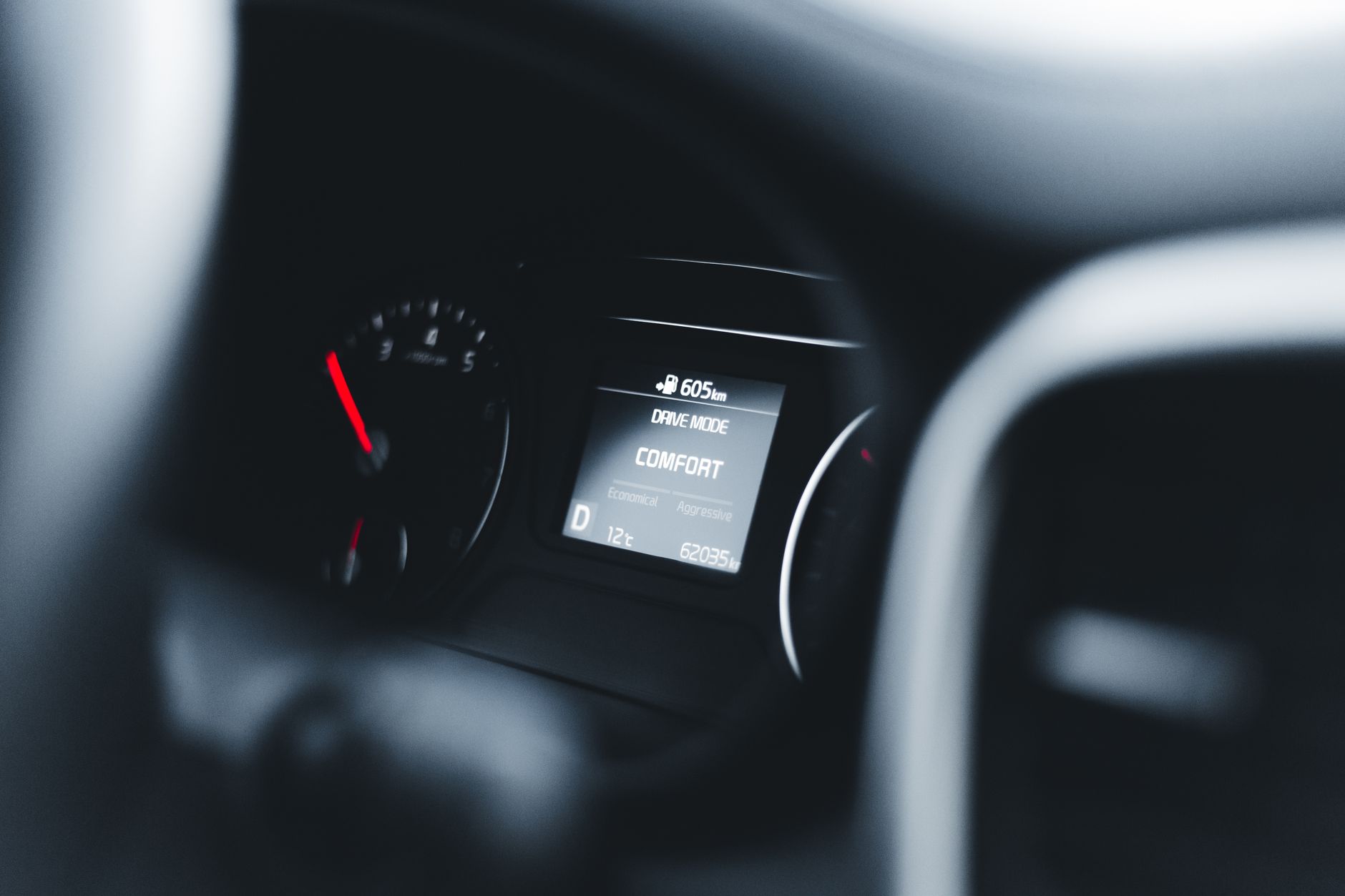
Step-by-Step Guide to Calculating Trip Fuel Costs
Calculating the precise cost of a road trip requires linking distance, adjusted fuel economy, and current fuel prices. By following a systematic, step-by-step approach, you can eliminate guesswork and build a reliable budget for any itinerary.
Step 1: Determine Total Distance
Establish the exact mileage of your planned route using mapping software or odometer logs. Let us assume your total planned distance ($D$) is 400 miles.
Step 2: Establish Realistic Fuel Economy (MPG)
Check your vehicle's highway fuel economy rating, but remember to adjust it downward if you plan to drive at sustained high speeds. Let's assume your car's standard highway rating is 28 MPG, but due to maintaining a brisk 70 mph pace, your real-world adjusted efficiency ($E$) is 24 MPG.
Step 3: Calculate Total Gallons Consumed
Divide the total distance by your adjusted fuel economy to find out how many gallons of fuel your vehicle will burn:
$$\text{Gallons Consumed} = \frac{\text{Distance } (D)}{\text{Adjusted Efficiency } (E)}$$
For our example:
$$\text{Gallons Consumed} = \frac{400 \text{ miles}}{24 \text{ MPG}} \approx 16.67 \text{ gallons}$$
Step 4: Multiply by Fuel Price
Multiply the total gallons consumed by the local or average cost per gallon ($P$) of fuel. Assuming a fuel price of $3.50 per gallon:
$$\text{Total Trip Fuel Cost} = \text{Gallons Consumed} \times \text{Fuel Price } (P)$$
$$\text{Total Trip Fuel Cost} = 16.67 \text{ gallons} \times \$3.50 = \$58.35$$
By utilizing a Trip Cost Calculator, you can automate these steps and instantly test different routing or vehicle speed scenarios.
Worked Example 1: The Cross-Country Family Vacation
Let us examine a practical scenario to see how speed, distance, and fuel costs combine on an extended trip.
Scenario Parameters:
- Total Distance ($D$): 1,200 miles
- Planned Average Speed ($S$): 65 mph
- Standard Vehicle Fuel Economy: 30 MPG
- High-Speed Efficiency Penalty: At 65 mph, efficiency drops by 10%, giving an adjusted efficiency of 27 MPG.
- Fuel Price ($P$): $3.20 per gallon
Step 1: Calculate Travel Time
$$\text{Time } (T) = \frac{1200 \text{ miles}}{65 \text{ mph}} \approx 18.46 \text{ hours}$$
Step 2: Calculate Fuel Consumption
$$\text{Gallons} = \frac{1200 \text{ miles}}{27 \text{ MPG}} \approx 44.44 \text{ gallons}$$
Step 3: Calculate Total Fuel Cost
$$\text{Cost} = 44.44 \text{ gallons} \times \$3.20 = \$142.21$$
This calculation shows that our family will spend approximately 18.5 hours behind the wheel and allocate roughly $142.21 strictly for gasoline, before factoring in lodging, food, or toll expenses.
To take this analysis a step further, suppose the family considers driving at 75 mph instead of 65 mph to reduce travel time. If the increased speed drops efficiency by another 10% (resulting in 24.3 MPG):
- $$\text{New Time} = \frac{1200}{75} = 16 \text{ hours}$$ (Saving 2.46 hours of driving time)
- $$\text{New Gallons} = \frac{1200}{24.3} \approx 49.38 \text{ gallons}$$
- $$\text{New Cost} = 49.38 \times \$3.20 = \$158.02$$
By comparing the two outcomes, the family can decide whether saving roughly two and a half hours is worth an extra $15.81 in fuel expenses and increased driving fatigue.
Worked Example 2: The High-Speed Business Commute
Consider a professional traveling frequently between regional offices where time is at a premium and higher speeds are maintained.
Scenario Parameters:
- Total Distance ($D$): 180 miles one-way (360 miles round trip)
- Planned Average Speed ($S$): 75 mph
- Standard Vehicle Fuel Economy: 25 MPG
- High-Speed Efficiency Penalty: At 75 mph, aerodynamic drag reduces efficiency by 20%, resulting in an adjusted efficiency of 20 MPG.
- Fuel Price ($P$): $3.80 per gallon
Step 1: Calculate Round-Trip Travel Time
$$\text{Time } (T) = \frac{360 \text{ miles}}{75 \text{ mph}} = 4.8 \text{ hours}$$
Step 2: Calculate Fuel Consumption
$$\text{Gallons} = \frac{360 \text{ miles}}{20 \text{ MPG}} = 18 \text{ gallons}$$
Step 3: Calculate Total Fuel Cost
$$\text{Cost} = 18 \text{ gallons} \times \$3.80 = \$68.40$$
Notice how dropping the speed to 60 mph might have increased the travel time slightly, but would have preserved a higher MPG rating, ultimately reducing the fuel expenditure for the exact same 360-mile journey. Comparing these trade-offs is a core benefit of using a Speed Distance Time Calculator alongside fuel tracking tools.

Analytical Frameworks and Decision Checks for Road Trippers
Before embarking on any long-distance drive, applying a structured decision check ensures that your mathematical models match practical realities. Road trip planning involves balancing three competing constraints: time, money, and driver fatigue.
Use the following checklist to evaluate your trip math:
- Verify Route Elevation Profiles: Mountainous passes require lower gears and higher engine RPMs, which counteract the benefits of maintaining steady highway speeds. Add a 15% safety buffer to your fuel consumption estimate if your route crosses major mountain ranges.
- Account for Payload and Roof Racks: External cargo carriers increase aerodynamic drag even further than speed alone. If you are mounting a roof box, your high-speed efficiency penalty may double.
- Monitor Regional Fuel Price Fluctuations: Fuel prices can vary significantly between states, provinces, or metropolitan areas. Plan your refueling stops ahead of time rather than filling up at highway-adjacent stations with inflated pricing.
- Factor in Rest and Stop Intervals: Pure mathematical driving time does not account for biological needs, vehicle refueling, or traffic incidents. A standard rule of thumb is to add 10% to 15% to your total calculated time for rest breaks.
Common Mistakes in Road Trip Fuel and Speed Math
Even experienced drivers make calculation errors when estimating road trip expenses. Avoiding these frequent pitfalls ensures your financial planning remains accurate:
- Assuming EPA Ratings Apply at All Speeds: EPA window-sticker estimates represent combined city and highway test cycles, not sustained high-speed interstate driving. Always apply a speed penalty factor for high-velocity travel.
- Ignoring Elevation Changes and Cargo Weight: Driving through mountainous terrain or hauling a heavy load of luggage significantly increases engine load and fuel consumption, regardless of your speed.
- Confusing Imperial and US Gallons: If you are traveling internationally, remember that UK (Imperial) gallons and US gallons are different volumes ($1 \text{ US gallon} \approx 0.832 \text{ Imperial gallon}$). Mixing these up will distort your cost calculations.
- Forgetting Idling and City Driving: Road trips rarely consist entirely of uninterrupted highway cruising. Traffic jams, rest stops, and city navigation consume fuel while adding zero distance to your odometer.
- Neglecting Tire Pressure and Maintenance: Underinflated tires increase rolling resistance. Operating a vehicle with tires inflated 5 PSI below recommended levels can reduce fuel efficiency by up to 3%, quietly inflating your trip costs.
Frequently Asked Questions
How does driving speed affect my overall fuel cost?
Higher driving speeds increase aerodynamic drag, forcing your engine to burn more fuel per mile. Driving above 65 mph typically causes a noticeable drop in miles per gallon (MPG), which raises your total trip fuel expenses.
How do I calculate travel time when speed limits change?
To calculate travel time across varying speed limits, break your route into distinct segments. Calculate the time for each segment using the formula Time = Distance ÷ Speed, then sum the times for all segments.
What is the best way to estimate fuel economy for an unfamiliar rental car?
Check the EPA fuel economy rating for the specific make, model, and year of the rental vehicle. For conservative budgeting, subtract 10% to 15% from the highway rating to account for highway cruising speeds and vehicle load.
Can a calculator handle both metric and imperial units?
Yes, dedicated tools like a Speed Distance Time Calculator and a Trip Cost Calculator allow you to input distances in miles or kilometers and fuel efficiency in MPG or liters per 100 kilometers (L/100km).
Why do my real-world fuel costs always exceed my initial math?
Real-world fuel costs often exceed simple calculations due to unexpected idling in traffic, running vehicle accessories like air conditioning, driving against strong head winds, and regional variations in fuel prices.
How does vehicle weight impact the speed-to-fuel ratio?
Heavier vehicles require more momentum and engine power to accelerate and maintain high speeds. When a car is fully loaded with passengers and cargo, its fuel efficiency drops further at high speeds compared to when it is empty.
Is there an optimal speed to maximize fuel economy on long trips?
For most conventional internal combustion vehicles, peak fuel efficiency is achieved between 45 mph and 60 mph in top gear. However, maintaining this speed on high-speed interstates may create traffic hazards, so drivers must balance efficiency with safe traffic flow.
How do electric vehicles (EVs) fit into speed and distance fuel math?
While EVs do not consume liquid fuel, they experience a similar aerodynamic penalty at high speeds. Increased speed drains the battery pack much faster, reducing overall driving range per charge and requiring more frequent charging stops.
Mastering the mathematics of vehicle speed, distance, and fuel cost transforms uncertain road trip planning into a predictable, manageable process. By accounting for the exponential impact of aerodynamic drag at higher speeds, calculating exact fuel consumption step by step, and utilizing reliable digital calculators, you can accurately forecast both your travel schedule and your travel budget. Take the guesswork out of your next journey by running the numbers before you hit the road.
Found this calculator guide useful? Support more free tools.
Buy Me a Coffee
Comments
Post a Comment