When household electronics are switched off or placed in standby mode, they often continue drawing a small but steady stream of electricity. This phenomenon is commonly known as vampire draw, phantom load, or standby power. While an individual device might only consume 2 to 5 watts while idle, the cumulative effect of dozens of routers, gaming consoles, smart TVs, microwave clocks, and phone chargers running 24 hours a day, 365 days a year adds up significantly on your monthly power bill. To take control of these hidden expenses, understanding the underlying math is essential. You can easily estimate these costs using practical instruments like the Appliance Running Cost Calculator or evaluate longer-term expenses via the Monthly kWh Cost Calculator.
In this comprehensive guide, you will learn how to measure idle electricity, understand the exact formulas governing continuous power usage, work through real-world scenarios, and discover actionable strategies to minimize phantom energy waste in your home or office. By running the numbers yourself, you can determine whether investing in smart power strips or making the effort to unplug certain devices makes financial sense for your household.
Understanding the architecture of phantom loads requires looking past the simple off-switch. Modern power electronics utilize switch-mode power supplies (SMPS) that remain active to regulate internal voltages, listen for infrared remote signals, maintain Wi-Fi handshakes, or run real-time clock displays. Because these systems never truly sleep, they establish a permanent baseline electrical demand that flows uninterrupted through your home wiring. Recognizing this continuous drain is the first step toward reclaiming wasted utility expenditures.
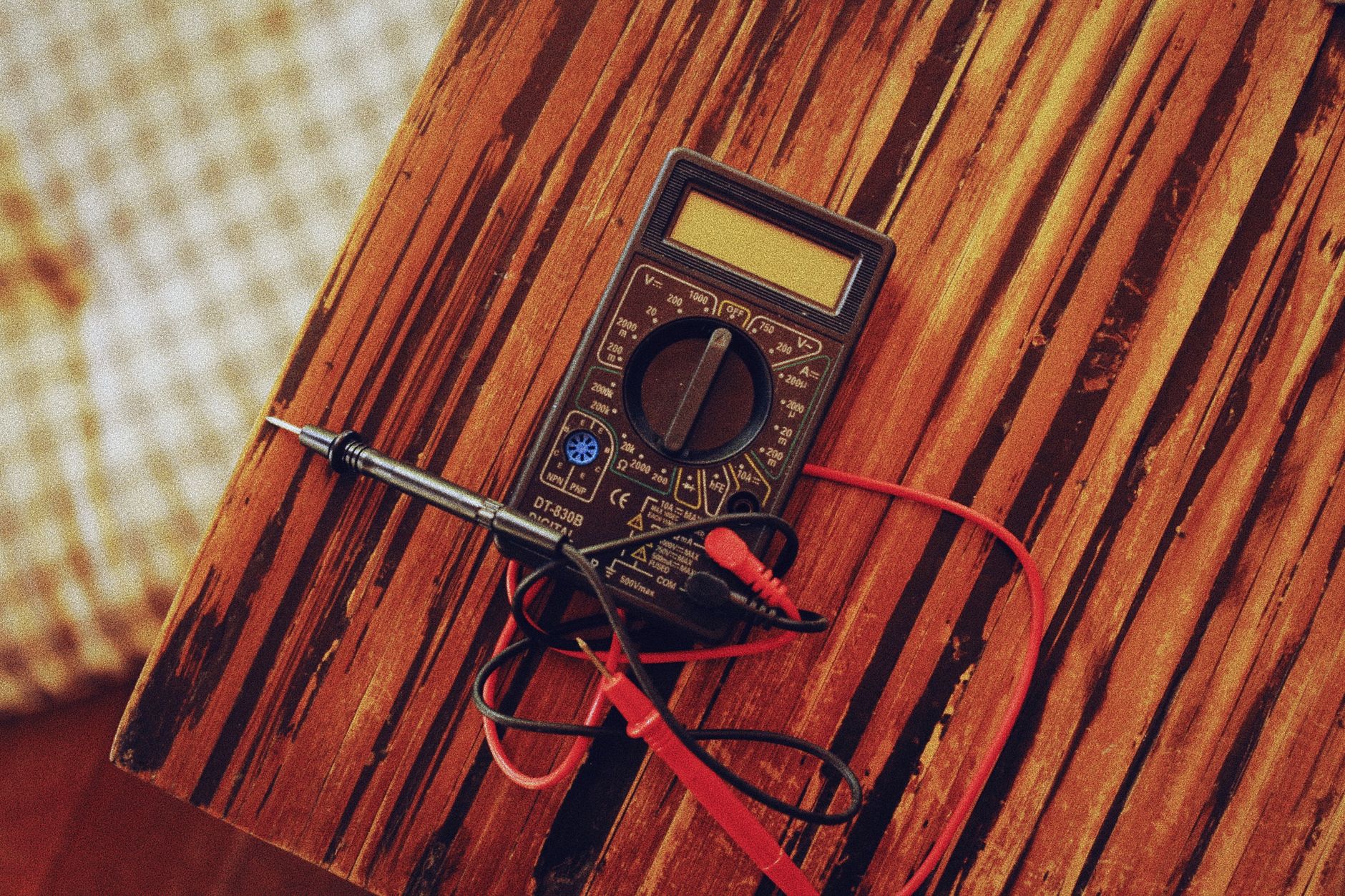
Understanding Vampire Draw and Standby Power
Standby power refers to the electrical energy consumed by appliances and electronic equipment while they are switched off or performing secondary functions such as displaying a clock, maintaining a network connection, or waiting for an infrared signal from a remote control. In modern homes, this invisible baseline load can account for up to 10% of total residential electricity consumption.
To analyze this consumption accurately, we rely on standard electrical metrics:
- Watts (W): The instantaneous rate of power consumption by a device at any given moment.
- Kilowatts (kW): Power expressed in thousands of watts ($1\text{ kW} = 1,000\text{ W}$).
- Kilowatt-hours (kWh): The total energy consumed over time, calculated as power in kilowatts multiplied by hours of operation.
- Utility Rate ($): The price charged by your electricity provider per kilowatt-hour consumed.
Because standby devices operate continuously—often 8,760 hours a year—even tiny wattage draws translate into substantial energy totals over twelve months. Pinpointing these loads requires a methodical calculation approach that accounts for both individual device metrics and aggregate household totals.
Furthermore, regional variations in grid efficiency and local utility pricing structures mean that the financial penalty of vampire draw fluctuates widely depending on your geographical location. Homeowners residing in areas with high marginal kilowatt-hour rates experience a much harsher financial impact from idle devices than those served by lower-cost municipal utilities.
The Core Mathematics: Formulas for Standby Energy
Calculating the cost of continuous appliance vampire draw involves a three-step mathematical sequence. First, you determine daily energy usage, then monthly or annual energy consumption, and finally convert that energy into monetary cost based on your local electricity rate.
Step 1: Convert Standby Watts to Kilowatts
Since utility companies bill electricity in kilowatt-hours (kWh), you must first convert the device's idle wattage into kilowatts:
$$\text{Power (kW)} = \frac{\text{Standby Power (W)}}{1,000}$$
Step 2: Calculate Daily, Monthly, or Annual Energy Consumption
Because standby power is drawn continuously, the time factor ($T$) represents the number of hours the device remains plugged in and idle during the billing period. For a full-time phantom load, this is typically 24 hours per day:
$$\text{Energy (kWh)} = \text{Power (kW)} \times \text{Time (Hours)}$$
For an entire year (8,760 hours), the formula simplifies to:
$$\text{Annual Energy (kWh)} = \left( \frac{\text{Standby Watts}}{1,000} \right) \times 8,760$$
Step 3: Calculate the Financial Cost
Multiply the total kilowatt-hours by your utility rate per kWh:
$$\text{Cost ($)} = \text{Energy (kWh)} \times \text{Electricity Rate ($/kWh)}$$
You can verify your broader household electricity totals using the comprehensive Electricity Cost Calculator or break down daily usage trends with the Energy Usage per Day Calculator.
When applying these formulas across complex multi-appliance ecosystems, it is vital to account for overlapping operational cycles. While active appliances spike your consumption profile intermittently, standby loads create a flat, uninterrupted floor of power consumption that never dips to zero unless physical disconnection occurs.
Worked Example 1: The Entertainment Center Phantom Load
Consider a typical living room entertainment setup consisting of a modern smart TV in standby mode, a streaming media box, a soundbar, and a gaming console left in 'instant-on' sleep mode. Together, these devices draw a combined constant idle load of 25 watts.
Your local electricity utility rate is $0.15 per kWh. Let us calculate the annual vampire draw cost for this entertainment center.
1. Calculate Annual Energy Consumption
$$\text{Power (kW)} = \frac{25\text{ W}}{1,000} = 0.025\text{ kW}$$
$$\text{Annual Hours} = 24\text{ hours/day} \times 365\text{ days/year} = 8,760\text{ hours}$$
$$\text{Annual Energy (kWh)} = 0.025\text{ kW} \times 8,760\text{ hours} = 219\text{ kWh}$$
2. Calculate Annual Cost
$$\text{Annual Cost} = 219\text{ kWh} \times \$0.15/\text{kWh} = \$32.85\text{ per year}$$
While $32.85 might seem modest for a single entertainment center, multiply this across multiple rooms containing idle computers, phone chargers, microwave ovens, and coffee makers, and total phantom load expenses can easily exceed $150 annually.
Expanding on this scenario, if you upgrade your gaming console to a newer model or disable its quick-start network standby feature, you can drop the aggregate idle draw from 25 watts down to 8 watts. Recalculating with the lower figure yields an annual consumption of just 70.08 kWh ($10.51 per year), instantly slashing over $22 annually off your utility bills from a single adjustment.

Worked Example 2: Comparing Single Devices vs. Multi-Device Strips
Imagine you have a home office workstation setup. The monitor, printer, and desktop speakers draw a combined idle standby power of 12 watts. You want to calculate the cost over a standard 30-day billing month where your electricity rate is $0.18 per kWh.
1. Calculate Monthly Energy Consumption
$$\text{Power (kW)} = \frac{12\text{ W}}{1,000} = 0.012\text{ kW}$$
$$\text{Monthly Hours} = 24\text{ hours/day} \times 30\text{ days} = 720\text{ hours}$$
$$\text{Monthly Energy (kWh)} = 0.012\text{ kW} \times 720\text{ hours} = 8.64\text{ kWh}$$
2. Calculate Monthly Cost
$$\text{Monthly Cost} = 8.64\text{ kWh} \times \$0.18/\text{kWh} = \$1.55\text{ per month}$$
Over a full year, this office setup costs approximately $18.60 just sitting idle. If you plug these devices into a master-controlled power strip that completely cuts power when the main computer is shut down, you eliminate this waste entirely.
To evaluate the financial return on investment (ROI) for mitigation hardware, consider that a quality smart power strip typically costs between $20 and $35. Based on our office workstation example saving $18.60 annually, the hardware pays for itself in roughly 13 to 22 months, after which all savings translate directly into net household budget reductions.
Step-by-Step Instructions: Measuring and Calculating Your Own Standby Load
To accurately audit your home for vampire draw, follow this structured procedure:
- Inventory Potential Culprits: Make a list of all electronics that feature remote controls, digital displays, indicator lights, external power bricks (wall warts), or network standby features. Common items include TVs, sound systems, streaming sticks, video game consoles, cable boxes, microwave ovens, coffee makers, and desktop printers.
- Measure Actual Wattage: Plug individual devices or power strips into a dedicated kill-a-watt meter or plug-in electricity monitor while the device is turned off or in standby mode. Note the wattage reading on the display.
- Record Your Electricity Rate: Check a recent utility bill to find your exact cost per kilowatt-hour ($/kWh). If your bill uses tiered pricing, use your marginal or average rate.
- Apply the Formulas: Use the equations detailed in this guide—or our recommended online calculators—to compute daily, monthly, and annual financial impacts.
- Take Action: Group devices on smart power strips, unplug chargers when not in use, or adjust device power settings (such as disabling quick-start modes on gaming consoles).
During the measurement phase, ensure your plug-in meter remains connected to the appliance for at least 15 to 30 minutes per device. Certain appliances cycle internal microcontrollers or periodically check for firmware updates while idle, meaning their standby draw fluctuates between a low baseline and periodic higher pulses. Recording a multi-minute average yields far more accurate annual projections than taking a single instantaneous snapshot.
Interpretation Guidance: What Counts as High Vampire Draw?
Not all standby loads are created equal. Interpreting your measurements helps you prioritize which appliances to target first:
- Under 1 Watt: Generally considered highly efficient. Modern phone chargers and LED nightlights in standby often fall into this category. The annual cost is pennies; intervention is rarely cost-effective.
- 1 to 5 Watts: Typical for small kitchen appliances with digital clocks, smart speakers, and basic routers. These cost between $1.00 and $7.00 per year each. Target them if you have dozens grouped together.
- 5 to 20 Watts: Common in cable boxes, satellite receivers, and older audio-video equipment. These represent high-priority reduction targets costing $10 to $30 annually per device.
- Over 20 Watts: Found in gaming consoles in 'instant-on' mode, older desktop computers, and smart TVs with always-listening voice assistants. These are prime targets for energy savings.
When reviewing your audit results, use a Pareto approach (the 80/20 rule). Focus your mitigation efforts exclusively on devices falling into the 5-watt and above categories. Spending time unplugging phone chargers that draw 0.3 watts yields negligible financial returns, whereas targeting a pair of cable boxes drawing 15 watts each will immediately move the needle on your utility expenses.
Common Mistakes to Avoid When Calculating Standby Costs
When auditing your home electricity usage, watch out for these frequent calculation errors:
- Confusing Operating Power with Standby Power: Make sure your wattage reading reflects the device when it is idle, not when it is performing active work (such as a microwave heating food or a TV playing a movie at full backlight).
- Ignoring External Power Bricks: Many AC/DC power adapters draw a tiny amount of power even when the device they charge is disconnected. Always measure wall warts directly.
- Overlooking Network Connectivity: Devices connected via Wi-Fi or Ethernet (like smart home hubs and streaming boxes) maintain active radios that draw more standby power than offline electronics.
- Using Outdated Utility Rates: Electricity rates fluctuate seasonally and regionally. Always check your most recent utility statement rather than relying on national averages.
Another prevalent oversight is forgetting that electricity prices often include delivery fees, transmission riders, and municipal taxes on top of the base generation rate. To achieve maximum calculation accuracy, look at the total bill amount divided by total kWh consumed to establish your true all-inclusive cost per kilowatt-hour.
Frequently Asked Questions
What is vampire draw and why does it happen?
Vampire draw is the electricity consumed by appliances when they are switched off or in standby mode. It happens because modern electronics require internal power supplies, remote control sensors, digital clocks, and network cards to remain energized so they can wake up instantly when commanded.
How much does vampire draw cost the average household annually?
Studies by energy agencies suggest that standby power accounts for roughly 5% to 10% of a home's residential electricity bill, translating to between $100 and $250 per year depending on local utility rates and the number of plugged-in electronics.
Which household devices consume the most standby power?
The biggest phantom power consumers are typically cable and satellite television set-top boxes, gaming consoles left in fast-start or sleep mode, desktop computers, smart home hubs, and older audio receivers with active display panels.
Do phone chargers use electricity when nothing is plugged into them?
Yes, but very little. A modern phone charger plugged into the wall with no phone attached typically draws less than 0.5 watts. While the cost is less than $0.50 a year, multiplying several warm-to-the-touch chargers across a house adds unnecessary minor waste.
How can I easily eliminate vampire draw without unplugging everything?
The easiest method is using smart power strips or master-controlled power strips. These devices automatically cut power to peripheral electronics (like printers, speakers, and monitors) when they detect that the main device (like a computer or TV) is turned off.
Can I calculate standby costs if my device uses variable wattage?
If a device cycles through different idle states, you can use a plug-in power meter that records cumulative kilowatt-hours over 24 hours. Divide that total kWh by 24 to find the true average idle wattage, then apply standard pricing formulas.
Conclusion
Continuous appliance vampire draw represents a stealthy drain on household finances, turning idle electronics into silent utility bill contributors. By measuring standby wattage, applying straightforward conversion formulas, and utilizing specialized tools like the Appliance Running Cost Calculator and Monthly kWh Cost Calculator, you can accurately quantify your phantom energy footprint. Implementing smart power strips, adjusting device sleep settings, and unplugging non-essential electronics provides an immediate, cost-effective way to trim unnecessary electricity usage and lower your monthly utility bills.
Found this calculator guide useful? Support more free tools.
Buy Me a Coffee
Comments
Post a Comment