Why Accurate Volume Conversion Matters in Baking
In baking, precision is key. A slight mis‑measurement can change texture, rise, or flavor. Converting from common kitchen units—cups, tablespoons, teaspoons—to metric milliliters (ml) ensures consistency, especially when following international recipes or using a digital scale that reads milliliters. Culinary artists and home bakers alike often encounter recipes published across different regions of the world, each utilizing distinct measuring traditions. When you master the art of volume conversion, you eliminate guesswork, safeguard against culinary failures, and open up a global repository of recipes that can be replicated with exactitude in your own kitchen.
Consider the delicate chemistry of a cake or pastry. Unlike savory cooking where adjustments can be made on the fly by tasting a sauce or stew, baking relies on precise ratios of flour, liquid, fat, and leavening agents. If a recipe calls for a specific volume of liquid, and your measuring cups are worn, poorly manufactured, or based on a regional standard different from the author's, your final product will suffer. By translating those volumes into standard milliliters, you connect directly to a universally understood metric system that treats every drop with mathematical consistency.
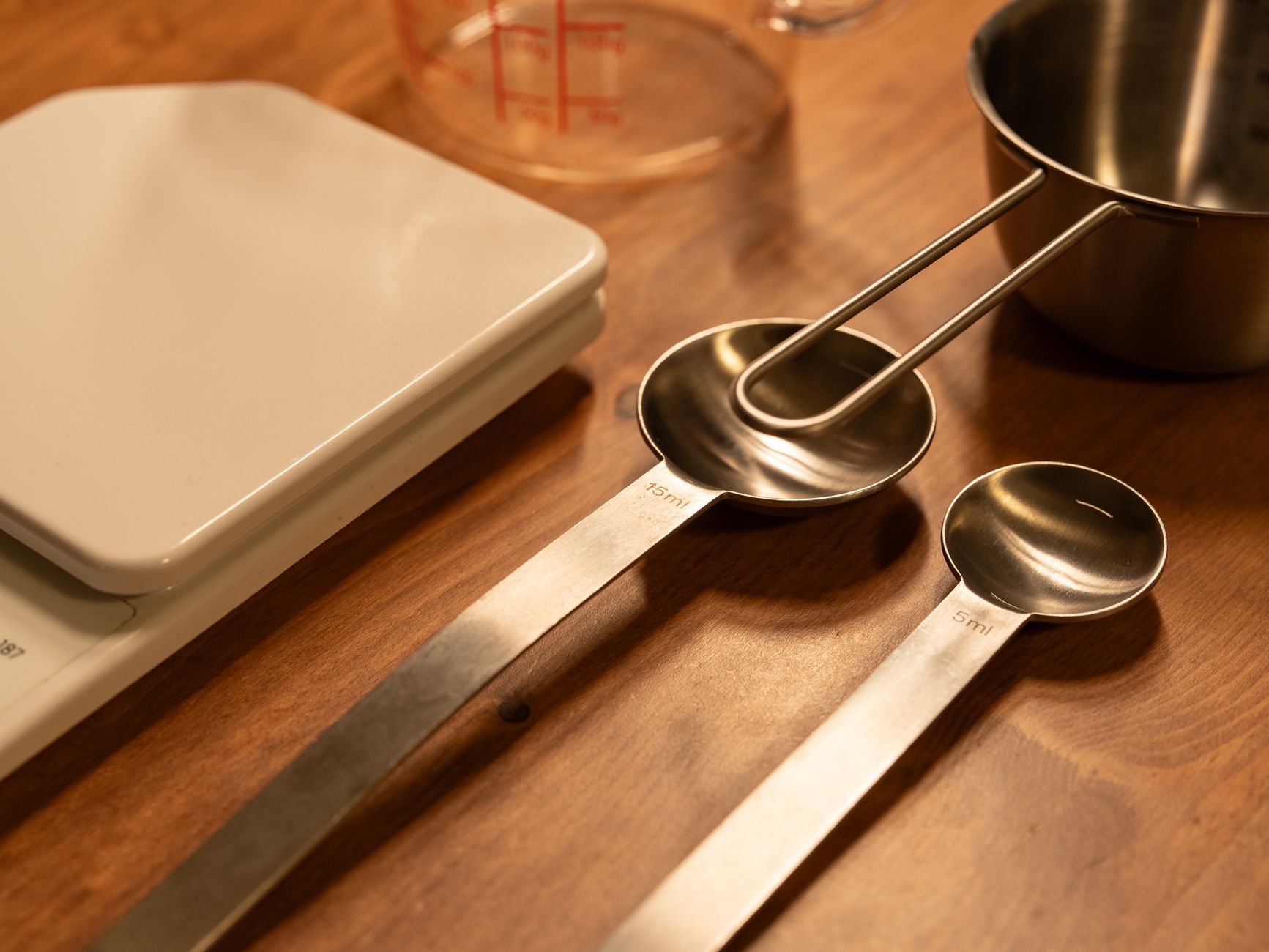
Understanding the Basic Volume Units
Before converting, know the relationships between the units you’ll work with to ensure you understand how these systems interlock:
- 1 cup = 16 tablespoons (Tbsp)
- 1 tablespoon = 3 teaspoons (Tsp)
- 1 cup = 8 fluid ounces (fl oz)
- 1 fluid ounce = 29.5735 milliliters (ml)
- 1 tablespoon = 14.7868 milliliters (ml)
- 1 teaspoon = 4.92892 milliliters (ml)
Why These Numbers Matter
These conversion factors are derived from the U.S. customary system. When you convert to metric, you’re essentially translating volume into a standard unit that scales linearly, making it easier to mix ingredients precisely. Furthermore, understanding the ratio between tablespoons and teaspoons or cups and tablespoons allows you to break down complex measurements into smaller, manageable increments when you only have specific measuring tools available in your drawer.
It is also worth noting the historical context of these measurements. The U.S. cup is rooted in the avoirdupois system of weights and measures, distinct from the metric cup used in countries like Australia, New Zealand, Canada, and the United Kingdom. Recognizing these subtle distinctions prevents common kitchen disasters where a recipe might look deceptively simple yet yield a batter that is far too wet or dry simply due to a 10-to-15 milliliter discrepancy per cup.
Step‑by‑Step Conversion Formula
The general formula for converting any U.S. volume unit to milliliters is:
Milliliters = Volume × ConversionFactor
Where Volume is the amount in cups, tablespoons, or teaspoons, and ConversionFactor is the milliliters per unit (e.g., 236.588 for cups).
Converting Cups to Milliliters
1 cup = 236.588 milliliters. So:
Milliliters = Cups × 236.588
When dealing with fractions of a cup—such as 1/3, 1/4, or 3/4—you can either convert the fraction to a decimal first or multiply the decimal equivalent directly. For instance, 3/4 cup is 0.75 cups. Multiplying 0.75 by 236.588 gives you 177.441 milliliters, which rounds neatly for practical kitchen work.
Converting Tablespoons to Milliliters
1 tablespoon = 14.7868 milliliters. So:
Milliliters = Tablespoons × 14.7868
In many casual cooking contexts, bakers simplify 14.7868 ml to 15 ml. While this 0.21 ml difference is negligible for a single tablespoon of flavoring extract, it can accumulate if you are scaling up a recipe that calls for twenty tablespoons of a liquid ingredient. Precision bakers always prefer using the exact decimal factor.
Converting Teaspoons to Milliliters
1 teaspoon = 4.92892 milliliters. So:
Milliliters = Teaspoons × 4.92892
Similarly, teaspoons are often rounded to 5 ml in everyday cooking. However, when working with potent ingredients such as almond extract, food coloring, or chemical leaveners like baking soda, keeping the exact conversion factor ensures that your flavors remain balanced and your rise remains uniform.
Comprehensive Cooking Measurement Conversion Table
To make your baking sessions seamless, refer to this quick-reference table for common kitchen increments translated into exact milliliters:
- 1/8 tsp: 0.62 ml
- 1/4 tsp: 1.23 ml
- 1/2 tsp: 2.46 ml
- 1 tsp: 4.93 ml
- 1 Tbsp (1/16 cup): 14.79 ml
- 1/4 cup: 59.15 ml
- 1/3 cup: 78.87 ml
- 1/2 cup: 118.29 ml
- 2/3 cup: 157.73 ml
- 3/4 cup: 177.44 ml
- 1 cup: 236.59 ml
- 2 cups: 473.18 ml
- 3 cups: 709.76 ml
- 4 cups (1 quart): 946.35 ml
Worked Example 1: Classic Chocolate Cake
Recipe calls for 2 cups of flour, 1½ cups of sugar, and ¾ cup of cocoa powder. Convert all to milliliters to maintain precise volumetric ratios.
- Flour: 2 cups × 236.588 = 473.176 ml
- Sugar: 1.5 cups × 236.588 = 354.882 ml
- Cocoa: 0.75 cups × 236.588 = 177.441 ml
Result: 473.2 ml flour, 354.9 ml sugar, 177.4 ml cocoa. By converting these dry volumes to their metric volumetric equivalents, you can use a graded laboratory cylinder or a precise liquid measuring jug if you are opting for volumetric measurement over weighing.
Worked Example 2: Lemon Drizzle Cake
Recipe lists 4 tablespoons of lemon juice and 2 teaspoons of vanilla extract. Let us compute the exact metric volume for these flavorful liquids.
- Lemon juice: 4 Tbsp × 14.7868 = 59.1472 ml
- Vanilla extract: 2 Tsp × 4.92892 = 9.85784 ml
Result: 59.1 ml lemon juice, 9.9 ml vanilla extract. This guarantees that the moisture content contributed by the lemon juice does not over-saturate the crumb, and the aromatic profile from the vanilla remains consistent across every baking batch.
Worked Example 3: Scaling a Family Recipe
Imagine you have a family muffin recipe that makes 12 muffins, requiring 3/4 cup of milk and 6 tablespoons of melted butter. You want to scale the recipe up by 50% to make 18 muffins.
- Original milk: 0.75 cups = 177.441 ml. Multiply by 1.5 to scale up: 177.441 × 1.5 = 266.16 ml.
- Original butter: 6 Tbsp = 88.7208 ml. Multiply by 1.5 to scale up: 88.7208 × 1.5 = 133.08 ml.
Result: 266.2 ml milk and 133.1 ml melted butter. Metric conversions make scaling fractional volumes significantly easier than attempting to calculate fractional cups in your head.
Using Online Converters for Quick Checks
When you’re in a hurry, the Volume Converter on MyCalcPilot can instantly translate any U.S. unit to milliliters. Just enter the quantity and unit, and the tool outputs the metric equivalent without requiring manual arithmetic. This is especially useful when your hands are covered in flour or batter, allowing for fast verification before tossing ingredients into your mixing bowl.

Common Mistakes and How to Avoid Them
- Mixing up tablespoons and teaspoons: A tablespoon is three times a teaspoon. Double‑check the unit abbreviations (Tbsp vs. Tsp) before converting.
- Using the wrong conversion factor: Stick to the standard factors above; using rough mental approximations like 15 ml for a tablespoon can introduce cumulative errors in large batches.
- Ignoring density differences: Volume conversions work exceptionally well for liquids. For dry ingredients like flour, sugar, or cocoa, packing technique can alter volume drastically, meaning weight (grams) is inherently more accurate.
- Rounding too early: Keep intermediate results precise during multi-step math, and round only at the final measurement step.
- Confusing U.S. and metric cups: Always check if your recipe originates from a country using the 250 ml metric cup versus the 236.59 ml U.S. customary cup.
Interpreting Your Results in the Kitchen
Once you have calculated your measurements in milliliters, you can implement several best practices in your kitchen workflow:
- Measure liquids with a transparent graduated liquid measuring jug placed on a flat surface, reading the meniscus at eye level.
- Adjust recipes for larger or smaller batch sizes by multiplying your milliliter values directly by your scaling factor.
- Use a kitchen scale that features a volume display mode if available, allowing you to pour liquid ingredients into a bowl on the scale and monitor the milliliter readout in real time.
Deep Dive: Liquid vs. Dry Volume Measurement Techniques
A frequent point of confusion among home bakers is whether volume conversion applies equally to dry and liquid ingredients. While 250 milliliters of water weighs almost exactly 250 grams due to water having a density of 1 g/ml, dry ingredients like flour possess a density much lower than water. One cup of flour does not weigh 236.59 grams; instead, it typically weighs around 120 to 125 grams because air is trapped between the flour particles.
Therefore, when you convert 1 cup of flour to 236.59 milliliters, you are calculating the space that the ingredient occupies, not its mass. If you are using a liquid measuring jug for dry ingredients, you must level them off correctly. However, professional bakers strongly recommend transitioning dry ingredient measurements from volume (cups) to weight (grams) whenever possible, while reserving milliliter conversions primarily for liquids such as milk, water, extracts, oils, and melted butter.

FAQ
Why do I need milliliters if I already have a measuring cup?
Measuring cups are convenient but can vary slightly between brands and wear down over time. Milliliters provide a precise, universally accepted unit, reducing variation and ensuring absolute consistency.
Can I convert grams to cups for flour?
Grams to cups depends on flour density and how it is packed. A typical conversion is 1 cup of all‑purpose flour ≈ 120 grams, but using a kitchen scale to measure in grams is always more accurate.
How do I convert liquid ounces to milliliters?
1 fluid ounce = 29.5735 milliliters. Simply multiply the number of fluid ounces by this exact factor to find your milliliter equivalent.
Is there a difference between metric cups and U.S. cups?
Yes. A metric cup used in Commonwealth nations is exactly 250 ml, while a U.S. customary cup is 236.588 ml. Always use the appropriate conversion based on the geographic origin of your recipe.
Can I use the volume converter for dry ingredients?
Dry ingredients’ volume varies with settling and density. While you can convert cup measurements of dry ingredients to milliliters of volume, weighing them in grams is the gold standard for baking accuracy.
How should I measure sticky liquids like honey or molasses?
Sticky liquids cling to measuring cups and spoons. To convert and measure accurately, you can lightly oil the measuring vessel beforehand, or weigh the ingredient in grams using a digital scale to bypass volume sticking issues altogether.
What is the most accurate tool for measuring in milliliters?
A clear glass or plastic graduated cylinder or a liquid measuring cup with fine metric increments viewed at eye level provides the highest accuracy for volumetric liquid measurements.
Conclusion
Accurate unit conversion from cups, tablespoons, and teaspoons to milliliters empowers bakers to replicate recipes faithfully, scale portions up or down without mental strain, and reduce culinary waste. By applying the simple formulas detailed in this guide and leveraging MyCalcPilot’s Volume Converter for instant verifications, you can ensure every batch of pastries, breads, and cakes turns out exactly as intended, recipe after recipe.
Found this calculator guide useful? Support more free tools.
Buy Me a Coffee
Comments
Post a Comment