Converting gallons to liters is one of the most common liquid measurement tasks when you are bridging US customary units with the metric system. Whether you are following an international cooking recipe, measuring liquid volumes for an aquarium, calculating fuel consumption for an imported vehicle, or managing industrial fluid inventories, understanding the exact math prevents costly mistakes. Because different regional standards exist for the gallon—most notably the US liquid gallon and the Imperial gallon used historically in the UK—knowing which standard you are using is essential for accurate results.
At CalcPilot's Volume Converter, you can quickly switch between units without manual arithmetic. However, knowing the underlying formulas, conversion factors, and common pitfalls helps you verify your numbers and build confidence in practical tasks. This guide breaks down the math, explains the differences between gallon types, provides worked examples, and answers frequent questions about fluid measurement conversions.

Understanding Liquid Volume Standards: US vs. Imperial Gallons
Before performing any calculation, you must identify which definition of a gallon applies to your problem. Mixing up these standards is the single most frequent error in liquid volume conversions.
- US Liquid Gallon: The standard used throughout the United States and several other countries for commercial trade and everyday liquid measurement. One US liquid gallon is legally defined as exactly 231 cubic inches, which equals precisely 3.785411784 liters.
- US Dry Gallon: Rarely used today, the US dry gallon is based on an older bushel measurement and equals approximately 4.40488 liters. For all standard cooking, fuel, and liquid storage calculations, assume the US liquid gallon unless explicitly stated otherwise.
- Imperial Gallon: Used historically in the United Kingdom, Canada, and other parts of the British Commonwealth. One Imperial gallon is defined as 4.54609 liters. It is roughly 20% larger than a US liquid gallon, meaning failing to account for this difference will severely skew your measurements.
For the remainder of this guide, references to 'gallons' will denote the standard US liquid gallon unless specified as Imperial.
The Core Conversion Formulas
Converting gallons to liters relies on multiplication, while converting liters back to gallons relies on division. Keeping these primary formulas handy simplifies your work:
Formula for US Gallons to Liters:
$$\text{Liters} = \text{US Gallons} \times 3.78541$$
Formula for Imperial Gallons to Liters:
$$\text{Liters} = \text{Imperial Gallons} \times 4.54609$$
Formula for Liters to US Gallons (Inverse):
$$\text{US Gallons} = \frac{\text{Liters}}{3.78541} \quad \text{or} \quad \text{Liters} \times 0.264172$$
Defining your variables clearly ensures consistency:
- $V_{\text{gal}}$ = Volume in gallons (US liquid)
- $V_{\text{L}}$ = Volume in liters
- $CF$ = Conversion factor ($3.78541$ for US gallons to liters)
Step-by-Step Instructions for Manual Calculations
If you do not have immediate access to a digital tool like the Volume Converter, you can execute manual conversions following these clear steps:
- Identify the Unit Type: Check your source data to confirm whether you are working with US liquid gallons or Imperial gallons.
- Isolate the Numeric Value: Note the exact gallon amount you need to convert (e.g., 15 gallons).
- Select the Appropriate Multiplier: Use $3.7854$ for US liquid gallons or $4.5461$ for Imperial gallons. For most practical non-scientific purposes, rounding the multiplier to four decimal places is sufficient.
- Perform Multiplication: Multiply your gallon figure by the conversion factor.
- Round Responsibly: Round your final liter figure based on your precision needs—typically one or two decimal places for everyday tasks.
Worked Example 1: Large-Scale Liquid Storage Tank
Imagine you are managing a backup generator system that requires a fuel storage tank evaluation. The manufacturer specifications state that your secondary containment basin must hold 250 US liquid gallons of diesel fuel. However, your regional environmental compliance reporting format requires all liquid volume measurements to be submitted in liters.
Step 1: Gather the known values.
Volume in US gallons ($V_{\text{gal}}$) = 250
Step 2: Apply the conversion formula.
$$\text{Liters} = 250 \times 3.78541$$
Step 3: Calculate the product.
$$250 \times 3.78541 = 946.35275$$
Step 4: Format the final output.
Rounding to two decimal places gives 946.35 liters. Your compliance report should list 946.35 liters of secondary containment capacity.
Worked Example 2: Aquarium Water Treatment Dosing
Suppose you are setting up a large freshwater aquarium with a total capacity of 45 US gallons. A specialized water conditioner treatment recommends dosing 5 milliliters of solution per 10 liters of water. To calculate the correct total dosage, you first need to convert your tank's capacity from gallons to liters.
Step 1: Identify the variables.
Tank capacity = 45 US gallons
Step 2: Perform the gallon-to-liter conversion.
$$\text{Liters} = 45 \times 3.78541 = 170.34345 \text{ liters}$$
Step 3: Calculate the required treatment dose.
Since the dose is 5 mL per 10 liters, divide your total liters by 10, then multiply by 5:
$$\text{Dosage} = \left( \frac{170.34345}{10} \right) \times 5 = 17.0343 \times 5 = 85.17 \text{ milliliters}$$
You need approximately 85.2 milliliters of water conditioner for your 45-gallon aquarium.
Worked Example 3: Automotive Fuel Economy and Consumption Metrics
When traveling internationally or analyzing technical literature regarding engine fuel consumption, you may encounter figures expressed in miles per US gallon (MPG) that need translation into liters per 100 kilometers (L/100km), or simple total fuel volumes needed for a long road trip.
Suppose you plan a driving route that requires purchasing 18 US gallons of gasoline to complete a multi-state trek. You want to know how many liters of fuel you are consuming to track your carbon footprint or budget in a country using metric currencies and units.
Step 1: Identify the initial fuel volume in US gallons.
$V_{\text{gal}} = 18$ gallons.
Step 2: Apply the conversion factor.
$$\text{Liters} = 18 \times 3.78541$$
Step 3: Compute the final value.
$$18 \times 3.78541 = 68.13738 \text{ liters}$$
Step 4: Review and round.
Rounding to one decimal place yields 68.1 liters of fuel consumed during your trip.
Deep Dive into Historical and Legal Definitions of Volume Units
To fully appreciate why volume conversion factors contain so many decimal places, it helps to review the metrological history of the gallon and the liter. The word 'gallon' derives from various old northern French terms used for measuring wine and ale. Historically, England maintained multiple gallons depending on the commodity being measured—such as the wine gallon, ale gallon, and corn gallon. In 1824, the British Imperial Weights and Measures Act consolidated these variations into a single Imperial gallon, defined as the volume of 10 avoirdupois pounds of distilled water weighed in air with specific barometric and temperature parameters.
Meanwhile, the US liquid gallon was derived from the Queen Anne wine gallon, which was legally standardized at 231 cubic inches in 1707. This definition was carried across the Atlantic and retained by the United States even after the British adopted the Imperial system. The metric liter, introduced during the French Revolution, was originally defined as the volume of one kilogram of pure water at its maximum density. Today, both the gallon and the liter are defined precisely in terms of SI metric units, with one liter legally set equal to one cubic decimeter ($1\text{ dm}^3$ or $1,000\text{ cm}^3$). Because 1 inch equals exactly 2.54 centimeters, the mathematical bridge between 231 cubic inches and liters yields the exact factor of 3.785411784...
Practical Applications Across Different Industries
Accurate liquid volume conversion is critical across numerous professional fields and everyday hobbies:
- Culinary Arts and Baking: Professional pastry chefs adapting European recipes (which rely on weight in grams or volume in milliliters and liters) to US commercial kitchens must convert liquid volumes accurately. Even a small discrepancy in water or milk volume can ruin hydration ratios in artisan bread doughs.
- Horticulture and Agriculture: Gardeners and commercial nursery operators mixing liquid fertilizers, pesticides, or herbicides must calculate proper dilution rates per gallon versus per liter. Miscalculations can either burn crops with overly concentrated solutions or render treatments ineffective.
- Aquaculture and Pet Care: Maintaining stable chemical parameters in marine and freshwater fish tanks requires exact dosing of medications, buffers, and plant nutrients relative to total water volume in liters.
- Automotive and Mechanical Engineering: Mechanics servicing vintage European or imported vehicles frequently deal with fluid capacities—such as engine oil, coolant, and transmission fluid—specified in liters, requiring quick translation to US standard fluid quarts and gallons.
Related Measurement Conversions
Fluid volume is just one dimension of measurement. In many practical scenarios, you may also need to transition between different physical units. For instance, when evaluating engine efficiency, drivers often switch between fuel economies using our Speed Converter concepts or distance metrics. Similarly, if you are calculating shipping freight charges based on package weight and liquid density, cross-referencing your calculations with a Weight Converter ensures your mass-to-volume estimates align correctly.
When planning physical spaces for tanks or equipment storage, dimensions must be checked against an Area Converter to guarantee that floor loading limits and footprint clearances are respected.
Common Mistakes to Avoid
Even experienced professionals occasionally trip over unit conversion nuances. Keep these common traps in mind:
- Confusing US and Imperial Standards: Using the US multiplier ($3.785$) on an Imperial gallon measurement (which requires $4.546$) introduces an immediate ~20% error. Always verify the origin of your data.
- Over-Rounding Intermediate Steps: If you round your conversion factor down to $3.8$ too early in a multi-step calculation involving large volumes, your final error margin will compound significantly. Maintain at least four decimal places until the final step.
- Mixing Weight and Volume: Liters and gallons measure volume, whereas pounds and kilograms measure mass. Water weighs roughly 8.34 lbs per US gallon, but other liquids like oil or chemical solvents have entirely different densities. Do not use gallon-to-liter volume formulas when calculating weight.
- Assuming Dry Gallons Equal Liquid Gallons: Agricultural or dry commodity measures use dry gallons, which are larger than liquid gallons. Ensure you are using liquid conversion standards for fluid applications.
- Neglecting Temperature Effects on Precision Industrial Volumes: While room temperature conversions are stable, massive industrial fluid transfers can experience thermal expansion or contraction that alters physical volume without changing mass.
Decision Check: When to Use Manual Math vs. Digital Tools
Determining whether to calculate volume conversions by hand or rely on a digital converter depends on the context of your task:
- Use Manual Calculations When: You are performing rough estimates, checking quick mental math, working in an offline environment, or studying educational math principles where understanding the underlying formula is required.
- Use Digital Converters When: You are handling high-stakes commercial inventories, precise chemical laboratory formulations, multi-unit batch recipes, or time-sensitive engineering calculations where eliminating human arithmetic error is paramount. Tools like CalcPilot's Volume Converter provide instant, foolproof conversions across all global standards.

Frequently Asked Questions
How many liters are in one US gallon?
Exactly 3.785411784 liters make up one US liquid gallon. For most practical everyday applications, rounding this number to 3.785 or 3.79 liters provides sufficient accuracy.
Is an Imperial gallon the same as a US gallon?
No. An Imperial gallon (used historically in the UK and Canada) equals approximately 4.54609 liters, making it about 20% larger than a US liquid gallon (3.785 liters).
How do I convert liters back into US gallons?
To convert liters to US liquid gallons, divide your liter value by 3.78541, or equivalently, multiply your liter value by 0.264172.
Why do recipes sometimes require precise liquid conversion?
Baking and chemical formulation rely on precise ratios. A small error in liquid volume can alter hydration levels in dough or disrupt chemical concentrations in specialized cleaning or aquarium solutions.
Does temperature affect gallon-to-liter conversions?
Strictly speaking, liquid volume expands or contracts with temperature changes. However, standard unit conversion factors are defined based on standard laboratory temperatures (typically 4°C or 20°C). For standard domestic and commercial use, temperature variation is negligible unless dealing with extreme industrial thermal expansion.
Can I use a digital converter for all my measurement needs?
Yes. Digital tools like our Volume Converter eliminate manual arithmetic errors and instantly handle fractional conversions across dozens of metric and customary units.
What is the difference between fluid ounces, pints, quarts, and gallons in the US system?
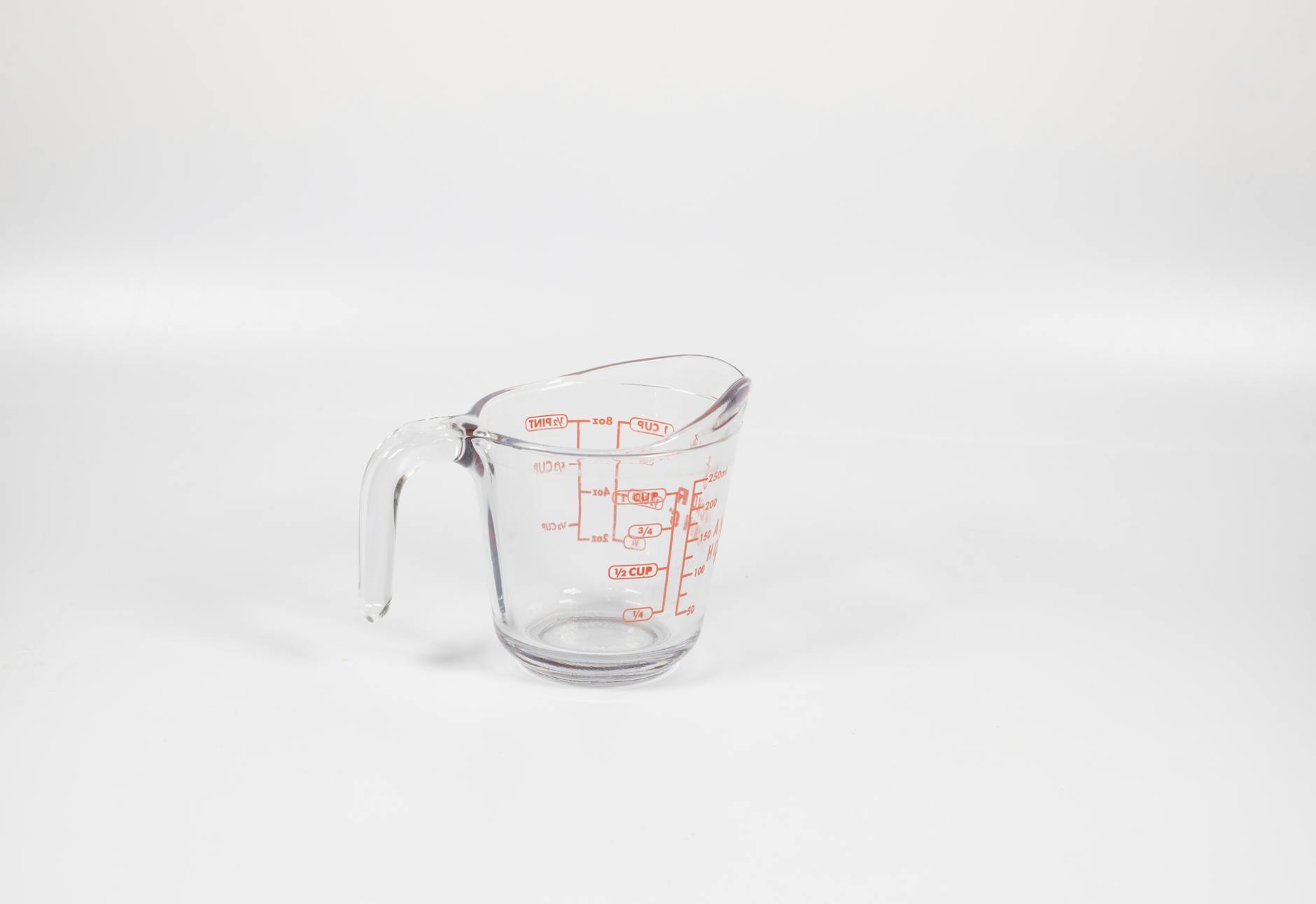
In the US customary system, volume units scale hierarchically: 1 pint equals 16 fluid ounces, 1 quart equals 2 pints (32 fluid ounces), and 1 gallon equals 4 quarts (128 fluid ounces or 8 pints). Understanding these subdivisions helps when converting partial gallon amounts into metric liters.
How can I convert gallons per minute (GPM) to liters per minute (LPM)?
To convert flow rates from gallons per minute (US GPM) to liters per minute (LPM), multiply the GPM value by the standard US gallon conversion factor of 3.78541. For example, a pump rated at 10 GPM delivers approximately 37.85 liters per minute.
Conclusion
Converting gallons to liters is a straightforward mathematical operation once you identify whether you are working with US liquid gallons or Imperial gallons. By applying the correct conversion factor—$3.7854$ for US standards or $4.5461$ for Imperial standards—you can execute accurate calculations for cooking, industrial storage, fuel management, and scientific hobbies. Always maintain appropriate decimal precision through your intermediate steps, and utilize dedicated tools like CalcPilot's Volume Converter whenever you need instant, error-free results across multiple unit systems.
Found this calculator guide useful? Support more free tools.
Buy Me a Coffee
Comments
Post a Comment